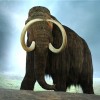

Bringing extinct animals back to life is a tantalizing idea for many people. Although there are many problems still to be solved, the process is gradually becoming more feasible. Whereas a few years ago scientists thought that recreating extinct species was an impossible task, some are now saying that it may be within the realm of possibility in the not-too-distant future, at least for some species. In fact, some Japanese scientists predict that they will be able to clone a woolly mammoth within five years.
How could resurrecting an extinct species that has long disappeared from the earth even be possible? The key is finding the DNA, or deoxyribonucleic acid, of the species. DNA is the molecule that contains the genetic code of an organism. The code is the set of instructions for making the animal’s body.
Once a sample of an extinct animal’s DNA has been found, the next step in the resurrection process is to find an existing animal that has some similarities to the extinct species. The extinct animal’s DNA is inserted into an egg of the existing animal and replaces the egg’s own DNA. The embryo that develops from the egg is then placed in a surrogate mother to develop.
DNA and its Significance
DNA is vital in the life of an organism. Human DNA not only contains the instructions for making a human baby from a fertilized egg but also affects many of our body’s characteristics during our life. DNA is also present in animals, plants, bacteria and some viruses. Even the viruses without DNA contain a similar chemical called RNA.
A great deal of research is taking place in relation to DNA and its activity, since this molecule is the key to life. The research is helping scientists understand how life works and is also helping them learn how to manipulate DNA.
DNA is located in the nucleus of an organism’s cells. It’s easier to find DNA from recently extinct animals than from animals that died out long ago, since the cells and DNA of dead animals break down over time. However, scientists are finding DNA fragments from ancient animals that died in environments that partially preserved their bodies, such as very cold climates. By combining these fragments with an existing animal’s DNA in an egg cell (or by replacing the existing animal’s DNA if they have the complete genetic code of the donor), scientists may be able to create babies that resemble the extinct animal.
Reproductive Cloning
In sexually reproducing organisms, the egg contains half of the offspring’s DNA and the sperm contains the other half. Once the egg nucleus and the sperm nucleus have combined during fertilization, the egg divides and produces an embryo.
Cloning is a process in which identical organisms are produced by a non-sexual process. In cloning, the researchers place all of the DNA needed to make the desired organism in an egg, so no sperm is required. The egg is triggered to divide artificially in order to make an embryo.
Somatic cell nuclear transfer is a common cloning method. In this process, a nucleus containing DNA is extracted from a cell of the desired animal. This nucleus is then inserted into the egg cell of a related animal, which has had its own nucleus removed. The resulting embryo is placed inside a surrogate mother. The baby that develops is identical to the desired animal, not the surrogate mother, and is said to be a “clone” of the desired animal.
Synthesis and Cloning
Another cloning method is known as synthesis. In this method, a fragment of the desired organism’s DNA (or of DNA produced in a lab) is combined with part of another organism’s DNA in an egg cell. The offspring therefore has some of the features of the desired organism, but not all of them. This method may be useful when only some of an extinct animal’s DNA has been found.
Recreating the Bucardo or Pyrenean Ibex
The bucardo was a large mountain ibex that was very well adapted for life in a cold and snowy environment. The last bucardo died in 2000. She was named Celia and died by being crushed by a tree. With her death, the bucardo became extinct. However, before Celia’s death some of her skin cells were removed and preserved.
The nucleus from one of Celia’s cells was placed in a goat egg whose nucleus had been removed. This process was repeated, resulting in the production of multiple embryos. 57 embryos were placed in surrogate mothers. Only seven surrogates became pregnant, and only one of these was able to keep the baby alive for the whole length of the gestation period. The successful surrogate was a goat-Spanish ibex hybrid. She gave birth to a clone of Celia. However, the baby had a large, nonfunctional mass attached to the functional part of one of its lungs and was only able to survive for about ten minutes.
The attempt to produce Celia’s clone was performed ten years ago. Since then, cloning techniques have improved significantly. The researchers plan to clone Celia again once they have obtained financial support. However, they don’t have any DNA from a male bucardo, so they can’t produce a mate for Celia’s clone.
Recreating Gastric-Brooding Frogs
The Lazarus Project in Australia has had partial success in recreating gastric-brooding frogs, which became extinct in 1983. The female of this fascinating species swallowed her fertilized eggs. Her youngsters developed in her stomach. The young froglets were released through their mother’s mouth.
Scientists collected dead gastric-breeding frogs and kept them in a freezer. In 2013 they announced that they had extracted the nucleus from a cell of an animal frozen since the 1970’s and implanted it into an egg of a related frog. This procedure was performed multiple times and multiple embryos developed. However, the embryos lived for only a few days.
The researchers are going to continue their frog cloning attempts. They may also attempt to clone the Tasmanian tiger, the dodo and the woolly mammoth.
Making Mammoth Hemoglobin
Scientists have not only found the code for making mammoth hemoglobin in a surviving fragment of the animal’s DNA but have actually made the hemoglobin.
After identifying the section of mammoth DNA that was responsible for producing hemoglobin, the scientists inserted the DNA into bacteria. The bacteria followed the “instructions” in the mammoth DNA and made hemoglobin, even though the bacteria don’t use the chemical themselves. The scientists were then able to compare the properties of mammoth and human hemoglobin.
Hemoglobin is a protein in mammal red blood cells. It picks up oxygen from the lungs and delivers it to the body’s cells. The researchers found that mammoth hemoglobin has a much higher affinity for oxygen at low temperatures than human hemoglobin. This would have been very helpful for mammoths, who lived in cold and icy environments.
Cloning Mammoths
The idea of bringing an entire mammoth back into existence has excited many people. The excitement has intensified since a well-preserved animal was discovered in Siberian permafrost in 2013. The body of the female mammoth included muscle tissue. As the scientists moved the mammoth, a dark liquid dripped out of its body, collecting in a cavity in the ice. It’s been suggested that this liquid is mammoth blood.
Even if the dark liquid is blood that has mysteriously stayed in a liquid form, some scientists doubt that it contains intact cells. However, a large amount of DNA has been collected from the remains of other mammoths that died in very cold environments. There is talk of inserting mammoth DNA into an elephant egg and using an elephant as a surrogate mother. Could cloning a mammoth work? Possibly, say some scientists.
De-extinction – Some Concerns
A new word has been added to the scientific vocabulary. Bringing extinct animals back to life is known as “de-extinction”. De-extinction is a fascinating but controversial topic, with many arguments both in support of the idea and against it.
Some concerns about bringing back extinct animals include the following.
An organism is more than just its genetic code. Events and experiences as it interacts with its environment affect its behavior (and sometimes its genes as well). Extinct animals recreated today would lack their original environment, so would they really be the original animal?
There are also concerns about how the recreated animals will affect ecosystems. Will they damage the environment or eliminate other species? Will they be doomed to a life of captivity? Will their existence be detrimental to humans?
Some people feel that the money used for cloning experiments should be used to help solve social problems and help humans in need.
The ethics of cloning bothers some people. They see genetic manipulation as a way of “playing God” and believe that we have no right to do this.
Other people are afraid that cloning may be dangerous because we don’t know enough about the consequences of manipulating DNA.
The fact that multiple attempts at cloning are usually necessary in order to get success also upsets people. At the moment, many eggs and embryos die in the quest to create a cloned animal.
Some Possible Benefits of De-extinctionThe factor that spurs many researchers on is the sheer wonder of de-extinction. It would be awsome to discover the true appearance of an animal that we know from only a few bones and to observe the animal’s behavior.
By sparking the public’s interest in extinct animals, scientists may also spark their interest in other animals on Earth.
Many recent animal extinctions have been due to human activities, such as hunting and habitat destruction. Some people feel a sense of justice in the idea of bringing back a species that we destroyed.
By studying and practicing cloning and genetic manipulation in the creation of extinct animals, scientists are discovering important information about DNA and genes and are learning new skills and techniques. Their knowledge will be useful in the study of human biology and the biology of animals that affect our lives directly, such as farm animals. It may even help scientists prevent and treat diseases.
Bringing back specific animals may be beneficial in certain ecosystems.
Planning For the Future
Zoos and other organizations are obtaining DNA from the animals in their care and preserving it. The good institutions are trying to breed endangered animals to prevent them from becoming extinct. If breeding efforts fail, the DNA may enable the species to be recreated in the future.
De-extinction is the only way for us to see animals already lost from the Earth, but it’s not an ideal situation and its success is uncertain. It’s a much better tactic to protect species that are alive today than to try to resurrect them in the future.
, Bringing Back Extinct Animals – Cloning Research and Concerns www.ozeldersin.com bitirme tezi,ödev,proje dönem ödevi